
jigsaw puzzle color islands technique provides curious players with a fresh, captivating perspective on why jigsaw puzzle remains one of the most rewarding mental challenges in the modern world. Whether you are taking a well-earned coffee break at your desk, relaxing on your daily commute, or unwinding in the quiet evening hours, a single puzzle session creates an oasis of calm deductive clarity in a busy day. Here on Jigsaw Puzzle Online, we are committed to sharing the rich background, tactical nuances, and practical wisdom that elevate your everyday puzzle experience.
You can put these concepts to the test immediately on the Jigsaw Puzzle Online interactive board. To explore a vast world of daily brain teasers, crosswords, jigsaws, and classic card puzzles, visit Easy Daily Puzzle or discover our curated collection of jigsaw puzzle games on Easy Daily Puzzle.
jigsaw puzzle color islands technique: the story and strategic heritage of jigsaw puzzle
Constructing color islands is the premier strategic habit that separates confident jigsaw solvers from frustrated table pickers. When faced with a complex image, beginners instinctively force border pieces together, often getting stuck in long sections of identical monochrome sky or water. The superior approach is sorting loose pieces into specialized trays based on high-information visual clusters: bright signage, architectural window frames, distinct textiles, or vibrant florals. Assembling these self-contained color islands in the middle of your board establishes solid, undeniable anchors. Eventually, natural bridge pieces emerge that seamlessly link these distinct islands directly into the surrounding frame.
Exploring the deeper aspects of jigsaw puzzle color islands technique reveals why simple games continue to hold such profound power over the human imagination. Behind every elegant grid, card tableau, or interlocking pattern lies a deliberate balance between order and chaos, designed to challenge our pattern recognition and problem solving faculties. When modern solvers understand these underlying principles, the game transforms from a casual pastime into a deeply satisfying mindful practice. Every round becomes an opportunity to refine your approach, test your hypotheses, and experience the quiet joy of finding the right move.
Historical records and trusted sources behind jigsaw puzzle color islands technique
Separating documented puzzle heritage from popular hearsay requires consulting authoritative historical and gaming records. For readers eager to examine archival rulebooks, championship history, and technical analyses, reference materials such as World Jigsaw Puzzle Championship rules and The Strong Museum of Play on early jigsaw puzzles offer exceptional factual depth. These trusted publications document the creators, innovators, and international communities who have nurtured these games over centuries. Whether you are researching tournament scoring systems, mathematical proofs, or cultural origins, verified sources ground our modern play in enduring traditions.
How jigsaw puzzle color islands technique guides player decisions in real games
Picture a large table covered in hundreds of loose pieces, with wide expanses of similar textures like rolling hills or calm water. The classic beginner pitfall is forcing pieces together along the border under dim room lighting, creating false fits that ruin the alignment. Using jigsaw puzzle color islands technique encourages you to group high-contrast visual islands first, such as distinct building facades, bright signs, or textured flowers. Constructing these vibrant clusters provides solid, dependable visual anchors that effortlessly guide the remaining assembly.
Tabletop visual problem solving is always won through patience and keen observation. When you learn to read subtle shifts in color gradient, tab geometry, and texture direction, piecing together a scattered image feels like effortless discovery. Each completed cluster cleans the workspace, giving you renewed clarity and momentum for the subtler background tones.
Essential player habits connected to jigsaw puzzle color islands technique
- Sort pieces by dominant color families and distinctive textures into dedicated sorting trays.
- Assemble vibrant focal points and text elements to create self-contained anchor islands.
- Examine tab silhouettes and line continuations closely instead of forcing uncertain fits.
- Step back from the board periodically to let your peripheral vision spot subtle color shifts.
Why clean visual design elevates jigsaw puzzle color islands technique
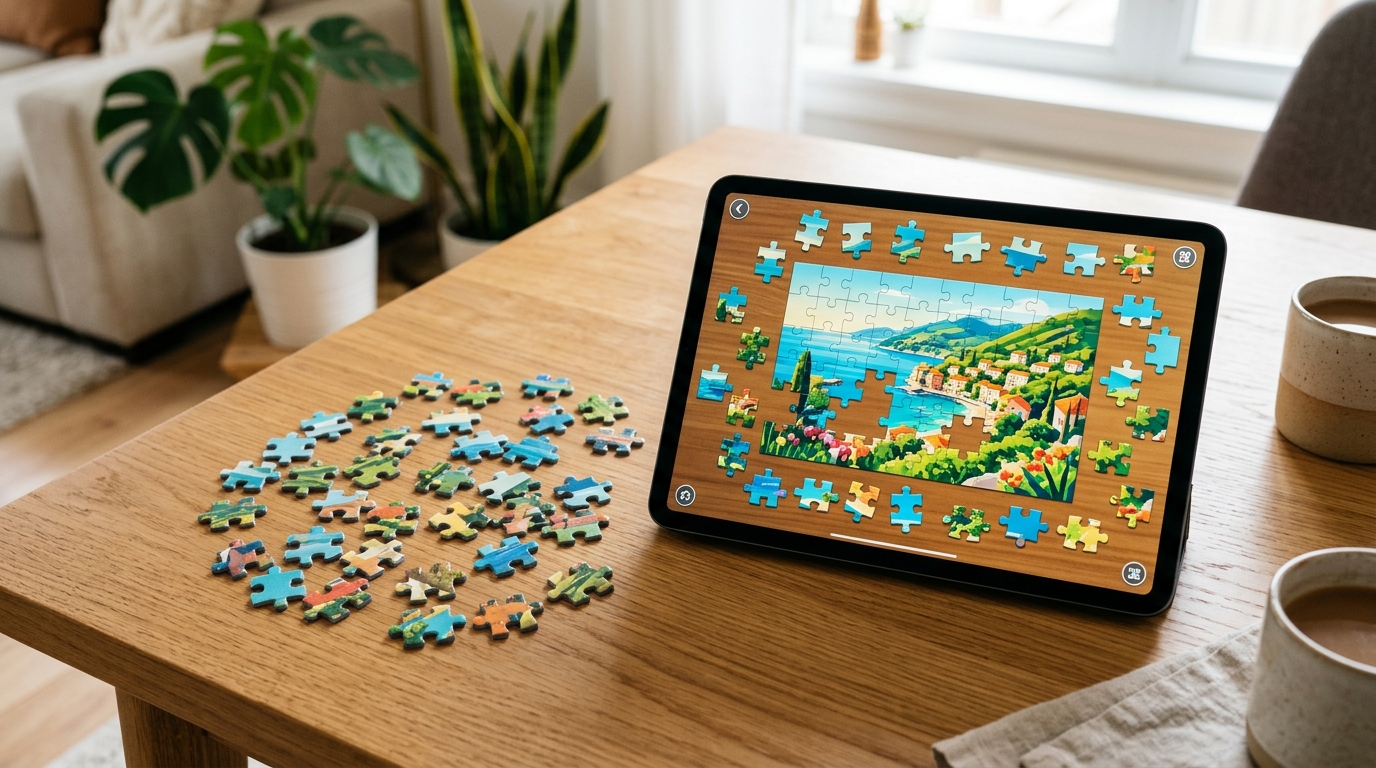
A clean, distraction-free visual presentation is essential for enjoying jigsaw puzzle on modern devices. The featured illustration accompanying this article has been selected to showcase the focused, calm atmosphere of deliberate play. Pairing clear visual graphics with descriptive alt text highlighting jigsaw puzzle color islands technique ensures that solvers can comfortably connect theory with on-screen action. Whether you are playing on a high-resolution desktop monitor or a compact mobile screen, sharp contrast and thoughtful interface design keep your focus squarely on the pleasure of solving.
Taking your next step with jigsaw puzzle color islands technique
The most enjoyable way to appreciate the power of jigsaw puzzle color islands technique is to dive into an actual round today with these fresh insights in mind. Head over to Jigsaw Puzzle Online for a relaxing, high-quality session where thoughtful strategy replaces rushed guessing. Whenever you want to expand your puzzle horizons with fresh daily challenges, explore the comprehensive Easy Daily Puzzle library for endless daily mental stimulation. Every completed puzzle is a testament to the timeless joy of clear logic, patient observation, and a well-played game.